


Brake Repair in Raleigh, NC Starts With Identifying the Cause
Squealing, grinding, vibration, pulling, a changing brake-pedal feel or a dashboard warning can all point to a braking concern. But the symptom by itself does not identify which component needs repair.
Triangle Car Care provides brake diagnosis, maintenance and repair for most makes and models from its Raleigh location on Glenwood Avenue. Depending on what the vehicle is doing, an evaluation may involve brake pads or shoes, rotors or drums, calipers, hydraulic components, parking-brake hardware or electronic brake-system information.
The useful first question is not simply, “Do I need brake pads?” It is, “What is causing the braking symptom?” Inspection, measurement and testing can help answer that question before a repair recommendation is made.
When Your Brakes May Need Attention
Changes in sound, pedal feel, stopping behavior or dashboard warnings can provide useful clues. More than one possible condition can create the same symptom, so inspection matters.
Squealing or Squeaking
A pad wear indicator is one possible source, but moisture, surface conditions, hardware and friction-material characteristics can also contribute to brake noise.
Grinding Noise
Grinding during braking deserves prompt attention. Severe friction-material wear is one possibility, although corrosion, debris or another mechanical condition can sometimes create similar sounds.
Brake Vibration
Pulsation or vibration while slowing may involve braking components, but wheels, tires, steering or suspension conditions can also produce sensations that feel brake-related.
Pedal Feels Different
A pedal that becomes unusually soft, lower, firmer or otherwise different from normal may involve hydraulic, mechanical or brake-assist conditions and should be evaluated.
Pulling While Braking
Unequal braking force is one possibility, but alignment, tires, steering and suspension can also influence the direction a vehicle travels during braking.
Brake or ABS Warning
Brake-related warning lights can represent different systems and conditions. Follow the vehicle owner's manual and have a persistent warning evaluated rather than assuming a particular component has failed.
When a Brake Problem May Mean You Should Stop Driving
If braking ability is substantially reduced, the pedal unexpectedly drops toward the floor, you see major brake-fluid loss, you cannot stop the vehicle normally, or a brake warning appears together with a major change in braking performance, move to a safe location as conditions permit.
Arrange appropriate assistance rather than continuing normal driving. Warning meanings and procedures vary by vehicle, so also follow the instructions in the owner's manual. A vehicle cannot be declared safe to continue driving without evaluating its actual condition.
How a Brake Concern Is Evaluated
The exact process depends on the vehicle and complaint. A useful brake diagnosis connects what the driver experiences with evidence from the relevant components.
Confirm the Symptom
Identify what the driver hears or feels and when it occurs, such as during light braking, harder stops, particular speeds or first use of the day.
Inspect & Measure
Relevant friction, hydraulic, mechanical and electronic components can be checked, with measurements compared with applicable specifications when needed.
Identify the Cause
Findings are considered together so a recommendation is based on the actual condition rather than a symptom alone.
Repair & Verify
Once the cause and appropriate service are established, the repair can be performed and relevant brake operation checked afterward.
Brake Repair Can Involve More Than Pads and Rotors
Most passenger vehicles use hydraulic braking. Pressing the brake pedal creates or assists hydraulic pressure that is transmitted through the system toward the wheel brakes. Friction material then acts against a rotating surface to help slow the vehicle.
Disc brakes generally use pads, calipers and rotors. Drum-brake designs use shoes, drums and associated hardware. Vehicles may use discs at all four wheels or a combination of disc and drum brakes depending on the design.
Modern vehicles can also integrate anti-lock braking, stability control, electronic parking-brake and other electronic functions.
A Brake Inspection Looks Beyond Friction Material
- Brake pad or shoe condition and remaining friction material
- Rotor or drum condition and applicable measurements
- Calipers, wheel cylinders and related hardware where applicable
- Brake hoses, lines and visible hydraulic leakage
- Brake-fluid level or condition when relevant
- Pedal feel and brake-assist operation where appropriate
- Brake or ABS warning information when a warning is present
- Parking-brake operation and related components
A Closer Look at Brake Components and Warning Signs
This visual guide shows several major brake components and common symptoms that may lead to further inspection. It is educational rather than a diagnosis of any particular vehicle.
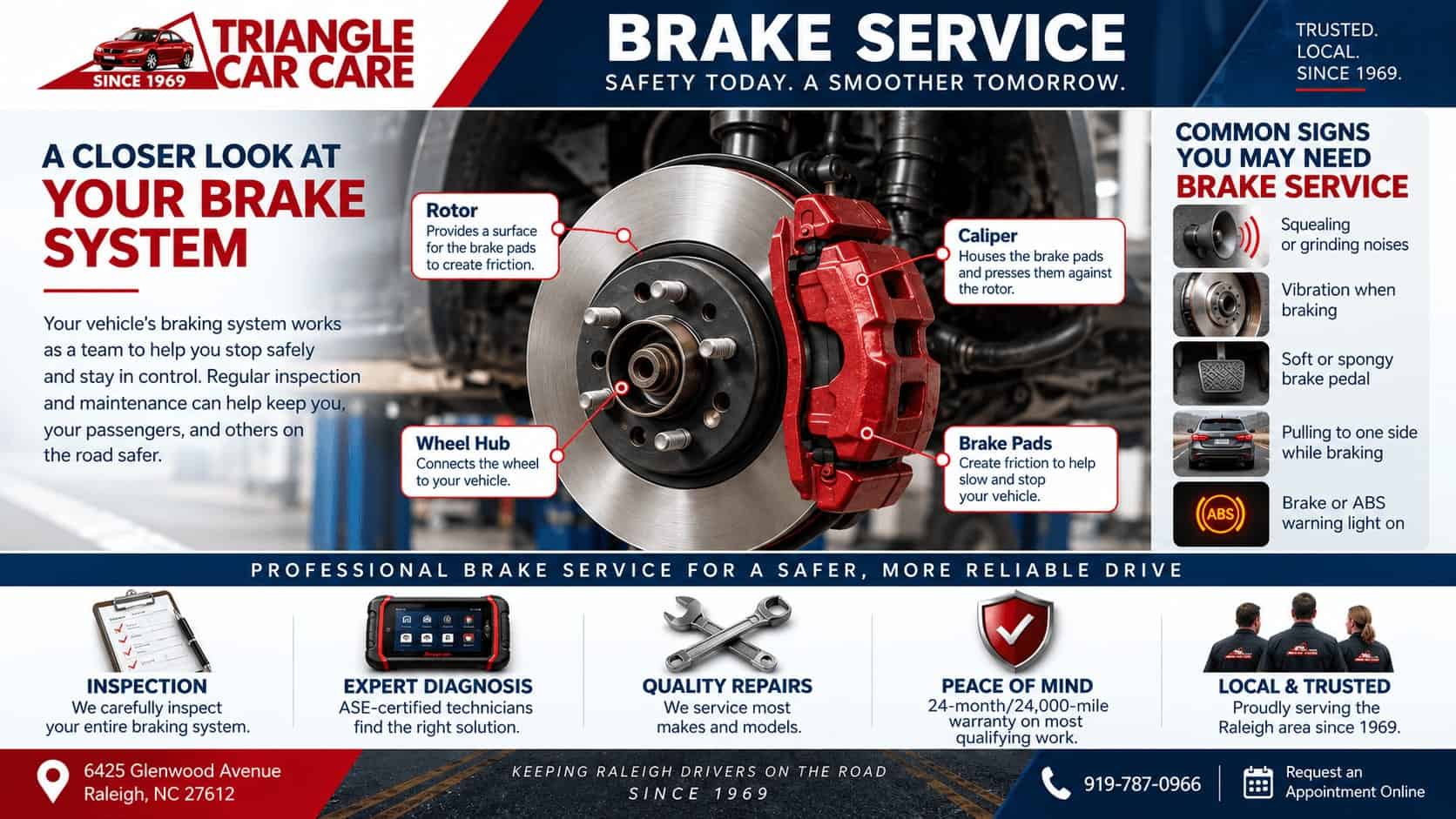
What Brake Repair May Involve
The appropriate repair depends on the vehicle, its specifications and what the inspection finds. Not every brake visit requires the same parts or service.
Brake Pads & Shoes
Friction materials wear with use. Replacement should be based on actual condition, applicable specifications and the design of the vehicle rather than one universal mileage number.
Rotors & Drums
Rotating friction surfaces can develop wear, damage or dimensional conditions that affect braking. Measurements and manufacturer service information help determine appropriate service.
Calipers & Wheel Cylinders
These components apply braking force at the wheels. Leakage, binding, movement problems or related faults may affect braking performance.
Brake Hydraulics
Hoses, lines, fluid, the master cylinder and related hydraulic components must transmit pressure correctly. Hydraulic faults require appropriate evaluation.
ABS & Brake Warnings
A stored fault or warning identifies a detected condition. It does not automatically prove which specific component needs replacement.
Parking Brake
Parking-brake systems can use mechanical cables, hardware or electronic actuators depending on the vehicle.
Do Brake Pads and Rotors Always Need Replacement Together?
No universal rule requires pads and rotors to be replaced together on every vehicle. They work as a friction pair, so rotor condition matters whenever pads are serviced, but the repair decision depends on actual condition and applicable specifications.
Rotor thickness, surface condition, damage and other measurements may affect whether a rotor remains suitable for service.
Brake-Fluid Maintenance Is Vehicle Specific
Brake-fluid specifications and maintenance recommendations vary by manufacturer, model year and braking system. There is no single replacement interval that should be applied to every vehicle.
The correct fluid type and service procedure should follow the information for the specific vehicle.
What Does an ABS Light Mean?
The anti-lock braking system is designed to help manage wheel lock during certain braking situations. An ABS warning means the vehicle has detected a condition associated with that system, but it does not identify the failed part by itself.
A red brake-system warning can have a different meaning from an ABS warning, so the two should not be treated as interchangeable.
Follow the owner's manual for the specific warning combination and arrange diagnosis when a brake-related warning remains illuminated.
How Urgent Is a Brake Symptom?
These are general guidelines rather than a remote safety inspection. The actual urgency depends on the cause and condition of the vehicle.
| What You Notice | What It May Mean | General Next Step |
|---|---|---|
| New squeal or chirp during braking | May involve a wear indicator, surface condition, friction material or another brake-related cause. | Arrange an inspection if it persists or changes. |
| Grinding when braking | Severe friction-material wear is one possibility, although other mechanical conditions can create similar sounds. | Prompt evaluation is appropriate. |
| Vibration or pulsation | Brakes are one possibility, but tires, wheels, steering and suspension can also contribute. | Have the cause identified before assuming rotors need replacement. |
| Brake or ABS warning remains on | Meaning varies by vehicle and by which warning is illuminated. | Follow the owner's manual and arrange appropriate diagnosis. |
| Pedal unexpectedly drops or braking ability is substantially reduced | May indicate a serious brake-system condition. | Stop driving when safely possible and arrange assistance. |
| Major visible brake-fluid loss | Hydraulic pressure and braking operation may be affected. | Do not continue normal driving; arrange appropriate assistance. |
How Often Should Brakes Be Inspected or Replaced?
There is no universal brake-pad replacement mileage that applies to every vehicle. Brake wear depends on vehicle design, friction material, traffic, driving habits, vehicle load, operating conditions and other factors.
Follow the brake inspection and maintenance information provided for your specific vehicle. A new noise, warning light, pedal change, vibration or meaningful change in braking behavior is also a reason to have the system evaluated.
Because friction materials are designed to wear, periodic attention can help reveal wear or another condition before it progresses.
Driving Conditions Can Affect Brake Wear
Mileage alone does not determine brake life. How the vehicle is driven and operated also influences friction-material wear and brake-system workload.
Brakes Are Part of North Carolina's Safety Inspection
The North Carolina Division of Motor Vehicles lists the foot brake and parking brake among the items examined during the state's vehicle safety inspection.
Inspection requirements and exemptions are established by the state and can change. Current NCDMV information should be used when determining what applies to a specific vehicle.
Learn more about NC car inspections in Raleigh .
Brake Service From an Established Raleigh Repair Shop
Triangle Car Care has served the Raleigh area since 1969 and is located at 6425 Glenwood Avenue, Raleigh, NC 27612. The shop provides automotive maintenance, diagnosis and repair for most makes and models.
For a braking concern, the goal is to determine what is actually causing the symptom before deciding which repair is appropriate.
Other Systems Can Affect How a Vehicle Feels While Braking
Pulling, vibration and handling complaints are not always caused by the brake system. These related services may be relevant after the source is identified.
Brake Repair Raleigh NC FAQs
Answers to common questions about brake noise, pads, rotors, warning lights, maintenance and brake service in Raleigh.
Why are my brakes squeaking?
Brake squeaking can have several possible causes. A pad wear indicator is one possibility, but moisture, surface conditions, hardware and friction-material characteristics can also create noise. Because the sound alone does not identify the failed part, inspection is more reliable than automatically assuming the vehicle needs new brake pads.
What does grinding when braking mean?
Grinding deserves prompt attention because severely worn friction material is one possible cause and continued operation may damage additional components. Debris, corrosion or another mechanical condition may also create similar sounds.
Why does my vehicle vibrate when I brake?
Brake-related rotor or friction-surface conditions can contribute to vibration, but wheels, tires, steering and suspension can produce similar symptoms. Inspection and measurement may be needed.
Does a brake warning light mean my pads are worn out?
Not necessarily. Vehicles can have different brake-related warnings. A warning indicates that the vehicle detected a condition; it does not automatically prove the brake pads need replacement.
Is an ABS warning the same as the regular brake warning?
No. ABS and primary brake-system warnings can represent different conditions, and their meaning varies by vehicle. Follow the vehicle owner's manual and arrange appropriate diagnosis.
Do I always need new rotors when replacing brake pads?
No universal rule requires pads and rotors to be replaced together on every vehicle. Rotor thickness, surface condition, applicable specifications and the reason for the repair all matter.
How often should brake pads be replaced?
There is no single brake-pad replacement mileage for every vehicle. Wear depends on vehicle design, friction material, traffic, driving habits, vehicle load and other operating conditions.
How often should brake fluid be changed?
Brake-fluid maintenance varies by manufacturer, model and year. Follow the maintenance information and correct fluid specification for the specific vehicle rather than using one generic interval.
Are brakes checked during a North Carolina vehicle safety inspection?
Yes. The North Carolina Division of Motor Vehicles lists both the foot brake and parking brake among the items examined during a vehicle safety inspection. State requirements and exemptions can change.
Can pulling while braking be caused by something other than the brakes?
Yes. Unequal braking force is one possibility, but tire condition, alignment, steering and suspension can also influence how a vehicle tracks while slowing.
Does Triangle Car Care service every make and model?
Triangle Car Care services most makes and models. Brake-system designs and requirements vary, so capability for a specific vehicle or specialized system should be confirmed when scheduling.
Does Triangle Car Care provide a warranty on brake repair?
Triangle Car Care publishes a 24-month / 24,000-mile warranty on most qualifying work. Coverage depends on the repair and applicable warranty terms.
How do I schedule brake repair in Raleigh?
Call Triangle Car Care at 919-787-0966 or request an appointment online . Triangle Car Care is located at 6425 Glenwood Avenue, Raleigh, NC 27612.
Notice Something Different About the Way Your Vehicle Stops?
Let the symptoms guide the diagnosis instead of guessing at the repair. Contact Triangle Car Care in Raleigh to request brake diagnosis, maintenance or repair service.


